The document most people never see.
The report a free app shows you is a highlights reel: a score, a list of accounts, a color. The full file disclosure is the file itself. Under the Fair Credit Reporting Act, section 609 (15 U.S.C. § 1681g), a bureau must disclose to you everything in your file, the source of each item, and the identity of everyone who has received your report for employment or credit purposes.
That last part is the one people underestimate. The disclosure names names — which furnishers reported what, and which companies pulled your file. When something on a report looks wrong, the disclosure is how you find out whose hands it passed through.
How to ask, bureau by bureau.
Equifax, Experian, and TransUnion each hold their own file. A disclosure from one says nothing about the other two — and the differences between them are themselves evidence.
Ask, in those words, for your full file disclosure under section 609 of the Fair Credit Reporting Act. Naming the right matters: it is the difference between the file and another summary.
In writing, certified mail, return receipt requested. The bureau will ask for identity documents — that is normal, and it is the one time sending them is the right move. Keep the green card with the answer when it comes.
Your free reports at AnnualCreditReport.com are the same starting material for most people. The disclosure goes further — sources and recipients — but never pay a third party for either document. Both are yours by law.
What arrives that the app never showed you.
Three things, mainly. First, the sources: every item traced to the company that furnished it, which is how you learn whether a wrong balance came from the original creditor or a collector downstream. Second, the recipients: the inquiry list with names attached, including pulls you may not recognize — an inquiry you cannot identify is a mark like any other. Third, the unedited identity section: every name variant and address the bureau has attached to you, which is where mixed files begin.
Only we could write this, because it is where our disputes are actually built: when a bureau later answers a dispute with “verified,” what happened inside is that your dispute was compressed into a two- or three-digit code and sent through a system called e-OSCAR to the furnisher — often without your documents. The disclosure is the raw material that code is made from. Holding the full file means you can see what the code left out. That compression is Lesson 1's whole subject — “Verified” Is a Code, Not a Check — including the second move the law builds in for when the code comes back as the answer.
The first ten minutes with it.
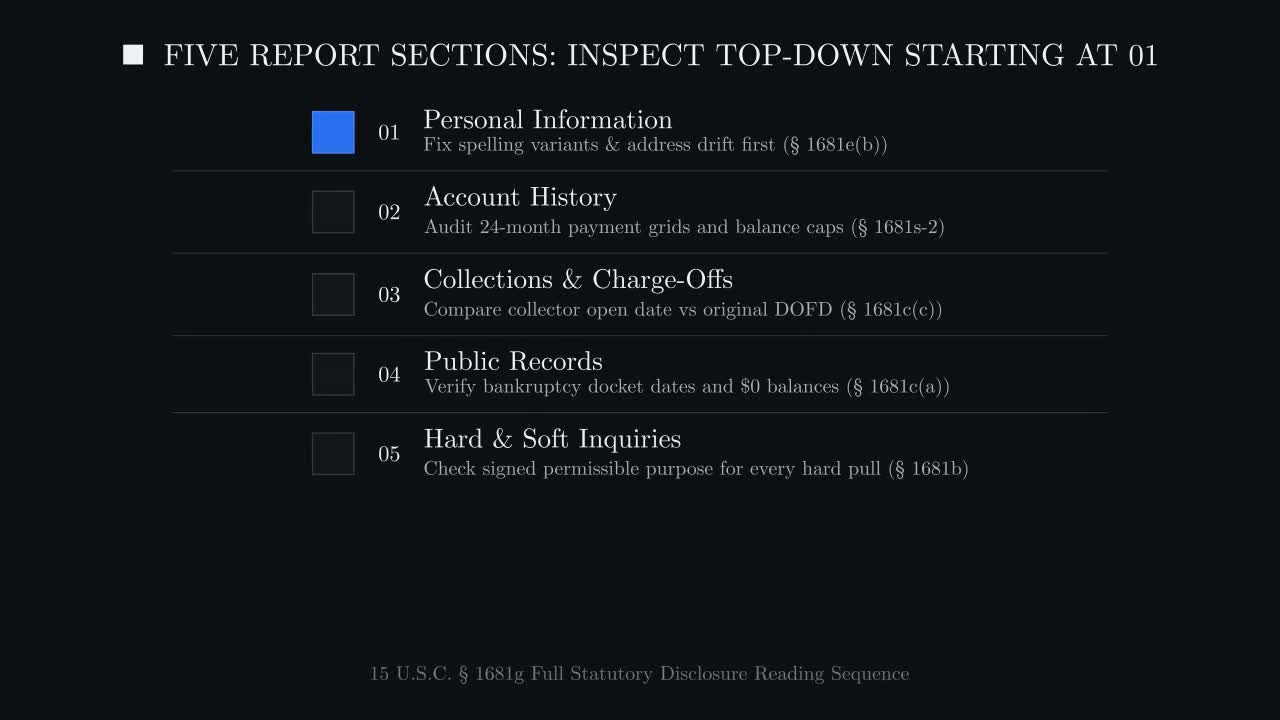
Start with the boring page. Read the identity section first and mark every name variant, old address, and wrong employer — disputes are matched against that page, and a mismatch poisons everything after it. Then check the inquiry list for names you do not recognize. Only then turn to the accounts, and read those with the three dates in hand: first delinquency, fall-off, and where the lawsuit clock stands.
The REPORT guide in this library walks the whole document in that order, with the four-line check for marking what looks wrong. This article's job is narrower: make sure the document in your hands is the full one.
What this answer gave you.
Keep the page. It is yours whether or not you ever use the scan. This is education, not financial or legal advice.
The next door is the one you choose.
Answers are free here, and so is the file they describe. If you want your own report read the way these pages teach, the free report is the door. If the document is in your hands, next in the library is [Guide 01, Read Your Own Report](/learn/read-your-report) — the whole disclosure walked in order, with the four-line check. If you want the next answer when it lands, the library account sends it.
FREE REPORT · FREE INVESTIGATION · $0 TO START
One email. The lesson series, the new instruments as they land, and the scan invite. The guides stay ungated either way.
Or keep reading. The library is a chain, not a dead end.
We read your whole file. Then we match you to the attorney program that fits.
This is education, not financial or legal advice. Every case is different. You may qualify — the free report and the investigation are how anyone finds out. Prefer to talk it through? Call or text (844) 990-2022. The free report is the front door.